
Cartagena Ripped You Off. This Is Where I Actually Go.
A $25 day at the beach Cartagena wishes it had. Plus why the "luxury" capital became a hustle factory from a "costeño from Bucaramanga haha" who's watched both cities transform.

I’m from this coast (not really). I grew up swimming on Santa Marta beaches before there was a single foreign tourist in El Rodadero. And the first time I sat on the sand in Boca Grande as a grown adult with money in my pocket, it took four minutes for the first woman to touch me.
She didn’t ask. She just put her hand on my shoulder, started kneading, and said “sólo siente la presión, mi amor.” Just feel the pressure. I said no. She kept going. I said no again. She finally walked away, but two minutes later her cousin showed up with the same script. By the end of the afternoon I’d said no to maybe twelve people. Massage women, bracelet kids, coconut guys, a guy with a parrot who wanted me to take a photo with it for a “donation,” and a tour operator very personally offended I didn’t want to see the Rosario Islands at his special foreigner- cachaco price, even after I told him in Spanish that I was Colombian from Santa Marta.
That’s Cartagena’s beach. That’s the postcard that put my country on every gringo’s bucket list.
I left that afternoon thinking the same thing most expats think after their first Boca Grande visit: this is what people are flying twelve hours for? Then I went home. The next weekend I sat at Inca Inca, four hours back up the coast in Santa Marta, and remembered why I never tell anyone to swim in Cartagena.
Let me show you what 25 dollars buys you when you go where I go.
Inca Inca
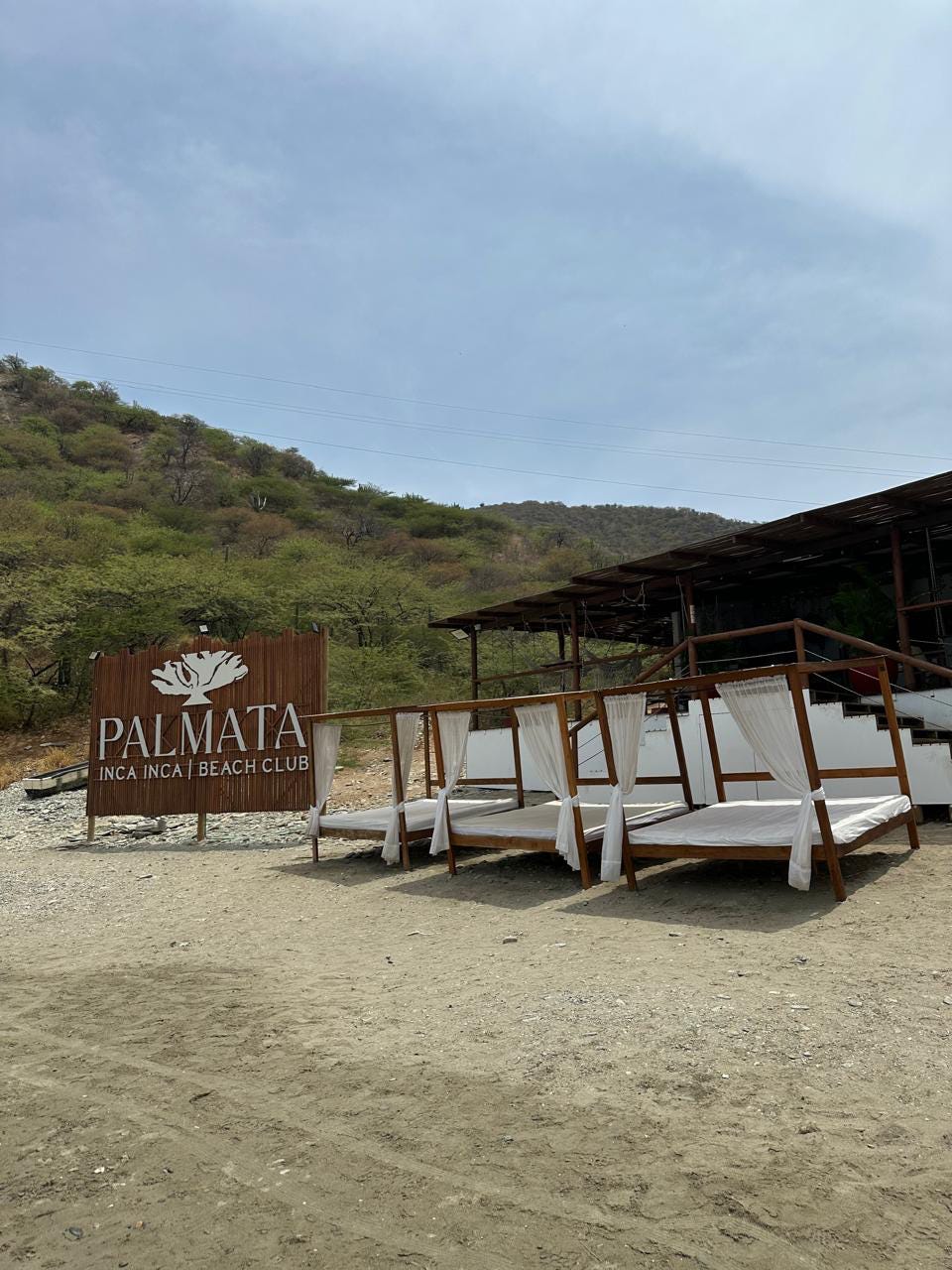
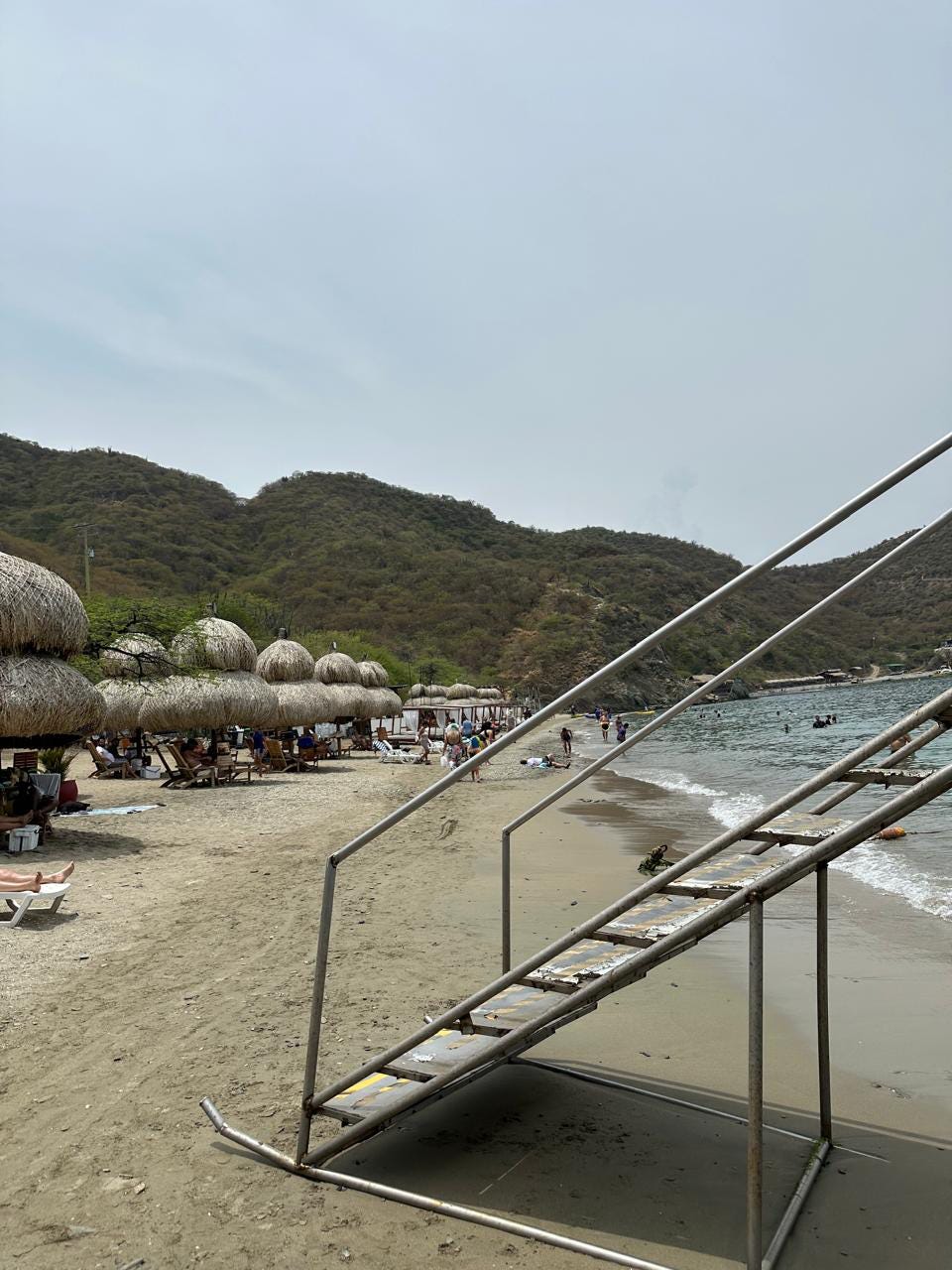
Inca Inca sits just past El Rodadero, the main beach strip in Santa Marta. You get there two ways: hike about 15 minutes along a coastal trail (beautiful if your knees still work) or take a lancha, small fishing boat, for five minutes from the main beach. The lancha runs 15,000 to 20,000 pesos depending on the captain’s mood ($3.50–$5 USD). Pay with a smile. Don’t argue. It’s a beer’s worth.
A few years ago someone with money walked into Inca Inca, looked at the sand, and built a private club. I know how that sounds. Private club on a Colombian beach reads like everything wrong with how this coast is getting commodified. Stay with me, what they actually built is the closest thing to peace you’ll find on a Caribbean beach in this country.
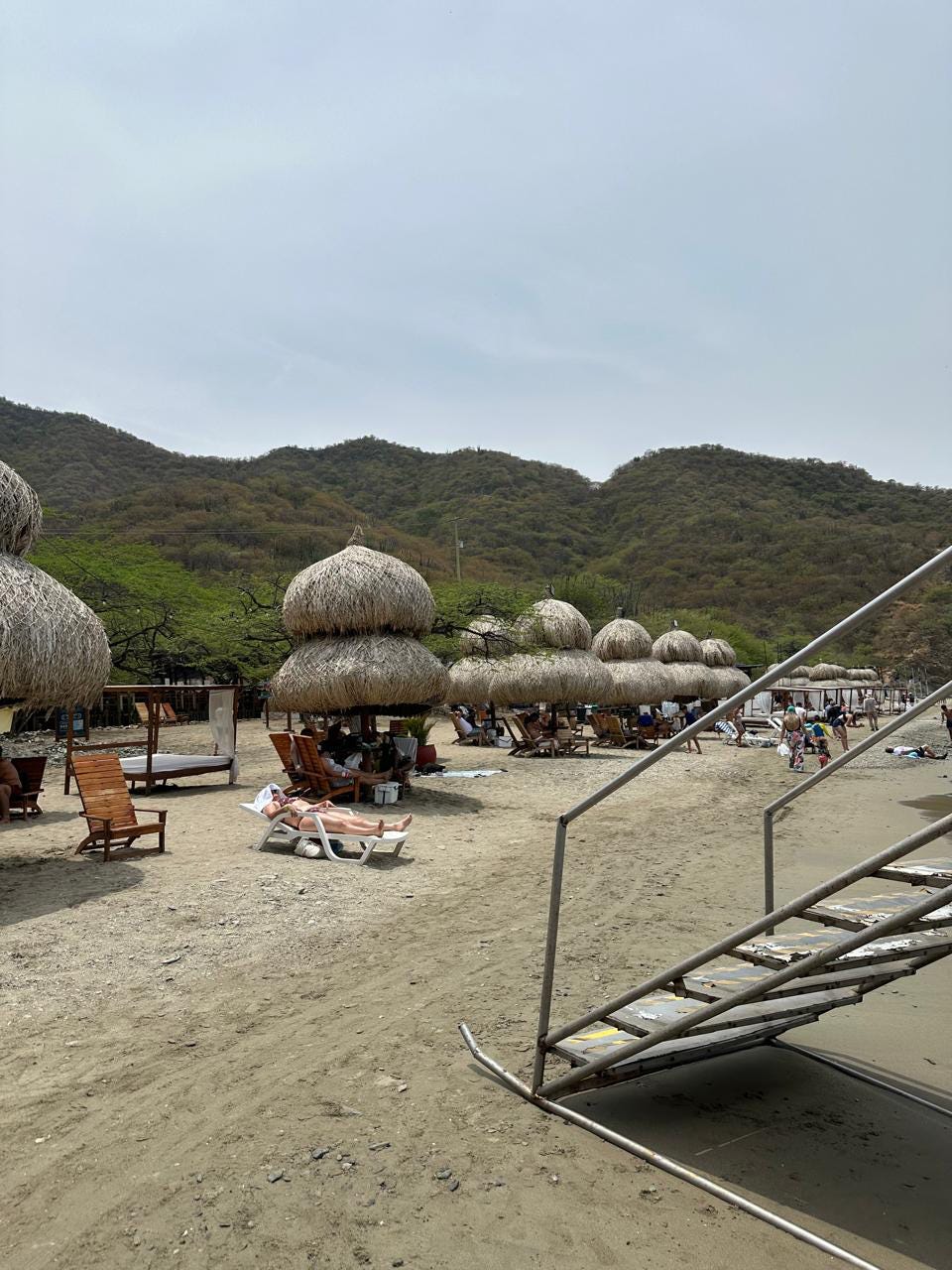
Entry is 80,000 pesos for the whole day ($20). What you get for that: a palapa, a thatched beach hut with an actual bed inside it, not a plastic chair, not a sun-bleached towel, an actual mattress where you can take a real nap with the waves doing the heavy lifting on your nervous system. Lunch on site runs 30,000 pesos ($7.50) for a full plate of fried fish, patacones, coconut rice, and a side of salad nobody eats. A cold Pola is supposed to be 10,000 but if you treat the staff like humans it drops to 5,000 ($1.25).
Total damage for a full day with food and drinks: under 100,000 pesos. About $25.
But that’s not why I’m writing this. The real reason is what you don’t experience.
Nobody touches you. Nobody approaches your bed every six minutes. There’s no parade of vendors with bracelets and coconuts and unsolicited body work. The volleyball game on the sand is families, not a hustle. The hammocks have books and beer cans and quiet people in them. The water is clean enough that you actually want to be in it. You exist as a person, not as a walking ATM with sunscreen on.
That alone is worth the 80,000 pesos.
Why my coast has two faces
Here’s the part the guidebooks won’t write, because they’re written by people who’ve been to Cartagena three times and called it Colombia.
Cartagena got rich. Or some neighborhoods of it did. The walled city is a Disneyland for couples on their second honeymoon. Real estate in Boca Grande went from cheap to absurd in 15 years. Tourism dollars flooded in for two decades, and the people who didn’t get a slice of that pie, most of them, by the way, learned one survival strategy: the foreigner is the resource. Extract maximum value per interaction. Never let one walk past without an attempt. It’s a hustle culture born from watching prosperity arrive in your city and skip your house. I don’t blame the people doing it. I blame what tourism did to the city.
Santa Marta is still mostly poor. Still mostly slow. The roads are bad. Half the downtown smells like fish on a hot afternoon. Half the businesses don’t open when they say they will because the owner had a long night. There’s no walled city, no luxury hotel arms race, no Instagram boulevards. And precisely because of that, the locals haven’t been sharpened against the visitor yet. Vendors here are sometimes annoying but they’re not predators. They walk by, offer once, you say no, gracias, they move on. Nobody touches your shoulder. Nobody runs the long con.
It’s not a moral difference between the two cities. It’s an economic one. Less tourism = less hustle pressure = a beach where you can read for two hours without anyone attempting commerce on your body.
I’m not going to pretend I want my hometown to stay poor forever. Santa Marta needs better roads, better hospitals, better schools. But I genuinely hope it develops without turning into Cartagena’s beach economy. Because once a city learns the hustle, it doesn’t unlearn it.
What’s coming
Next weekend I’m hitting Playa Calderón. Even quieter, even less known. The kind of place where ten gringos show up per month and five hundred locals already know exists. I’ll write that one up too.
After that, more. I’m building a small library of the spots most expats never find because they listen to the same five Cartagena influencers who keep recommending the same six restaurants where they get a free meal for the post.
I won’t be blowing these places up. I won’t be geotagging them into oblivion. The whole point of having a costeño parcero, somebody who grew up on this coast, who knows the boat captains by name and the lunch ladies by their kids’ names, is that you get the real version, not the version Google rewards.
If you’re heading to the Colombian Caribbean, do yourself this favor: spend one day in the walled city of Cartagena if you must. Eat the arepa de huevo, take the photo at the Reloj. Then get on a bus or a flight to Santa Marta and find Inca Inca. Pay your 80,000 pesos. Eat your fish. Drink your “fría” or “Pola”. Watch the water.
You’ll understand why no one from my hometown actually swims in Cartagena.
Dios te bendiga, amigos. More gems on the way.