
I Was One of Seven People at This Caribbean Beach
Playa Calderón, Santa Marta. Fifteen staff. One family. Me. And the most counterintuitive sales lesson on this coast.

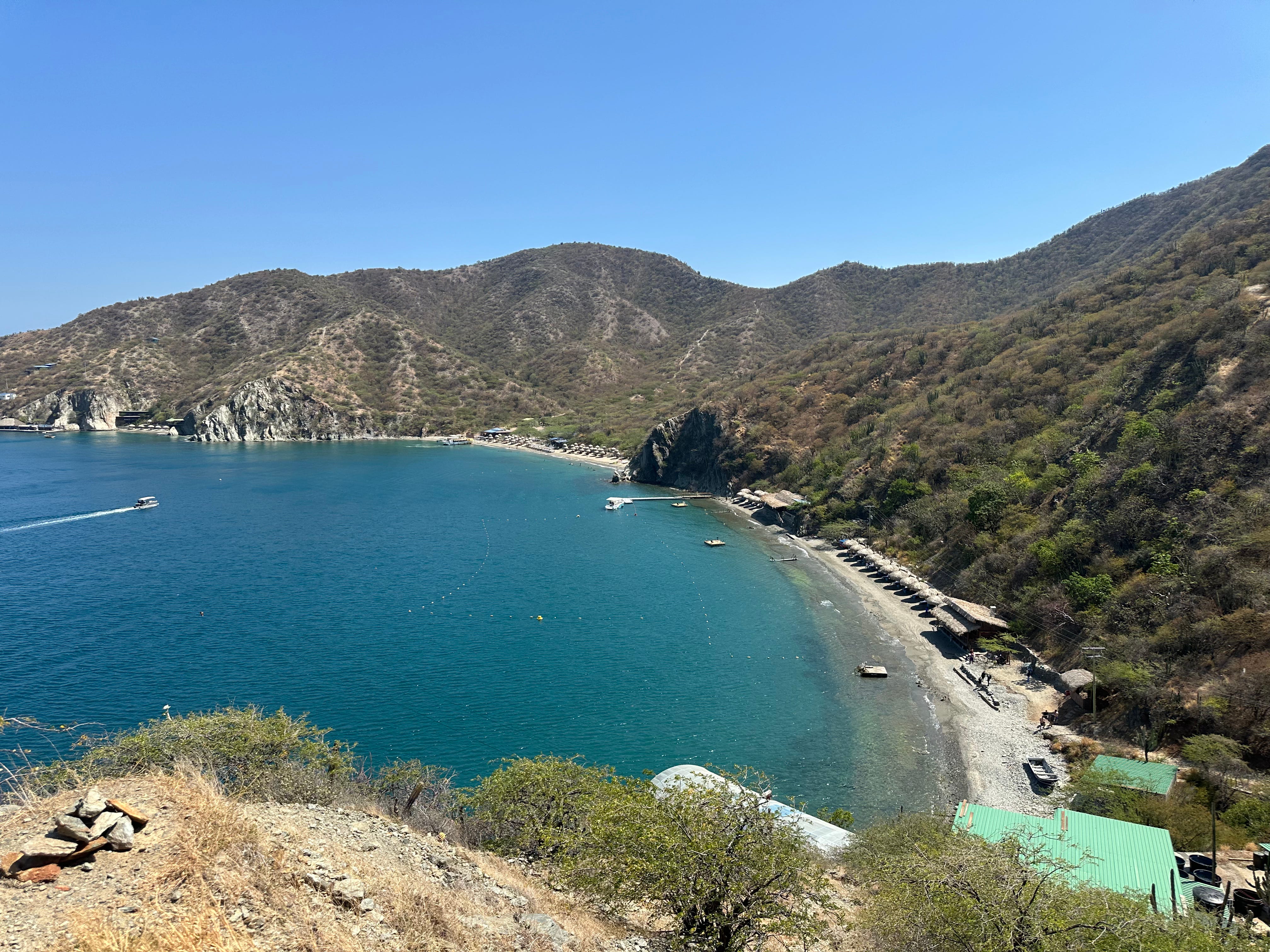
Let me describe last Saturday for you.
Fifteen staff members. One family of seven, husband, wife, five kids. Me and mi mujer, alone in a palapa with two sodas and a book, watching the kids try to teach themselves how to bodysurf with the kind of stubborn commitment that makes you remember why kids are better than adults at almost everything.
That was the entire population of the beach for the whole day.
No vendors. No bracelet kids. No tour operators with parrots. No skimmed cards at the beach bar. No women putting their hands on your shoulders every six minutes. Nobody trying to sell us anything except more lunch, and even that, only once.
I’m not a costeño. I was raised on this coast, but my family is from the interior, Bucaramanga, Boyacá, Cali, Medellín. Mountain people. I know these beaches the way the kid who grew up on them knows them. I judge them like someone who can leave. And in twenty-some years of going to Caribbean beaches in this country, I have never been to one this quiet.
The beach is called Playa Calderón. It’s twenty minutes on foot from El Rodadero, in Santa Marta. This is the second article in my Caribbean coast series, the first was about Inca Inca, a clean, civilized, twenty-dollar day at a private club a few minutes up the coast. If Inca Inca is the gateway drug, Calderón is the dealer’s living room.
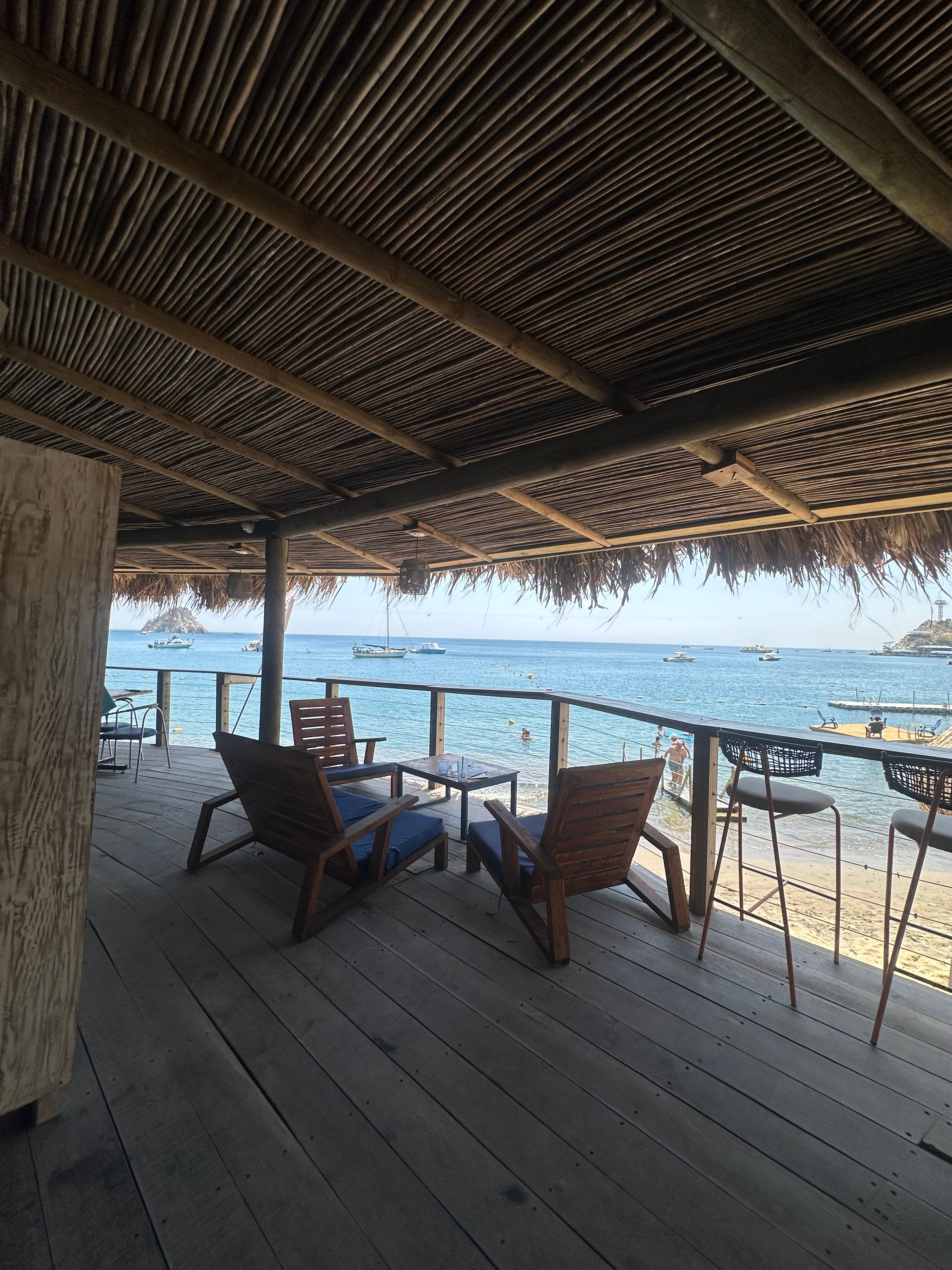
Getting there
Two ways. A lancha from El Rodadero will run you about 20,000 pesos one way ($5 USD) and takes five minutes. Or you do what I did and walk, twenty minutes up a coastal trail that climbs, descends, and drops you at the cove. Nothing extreme. If your legs work, you can do it.
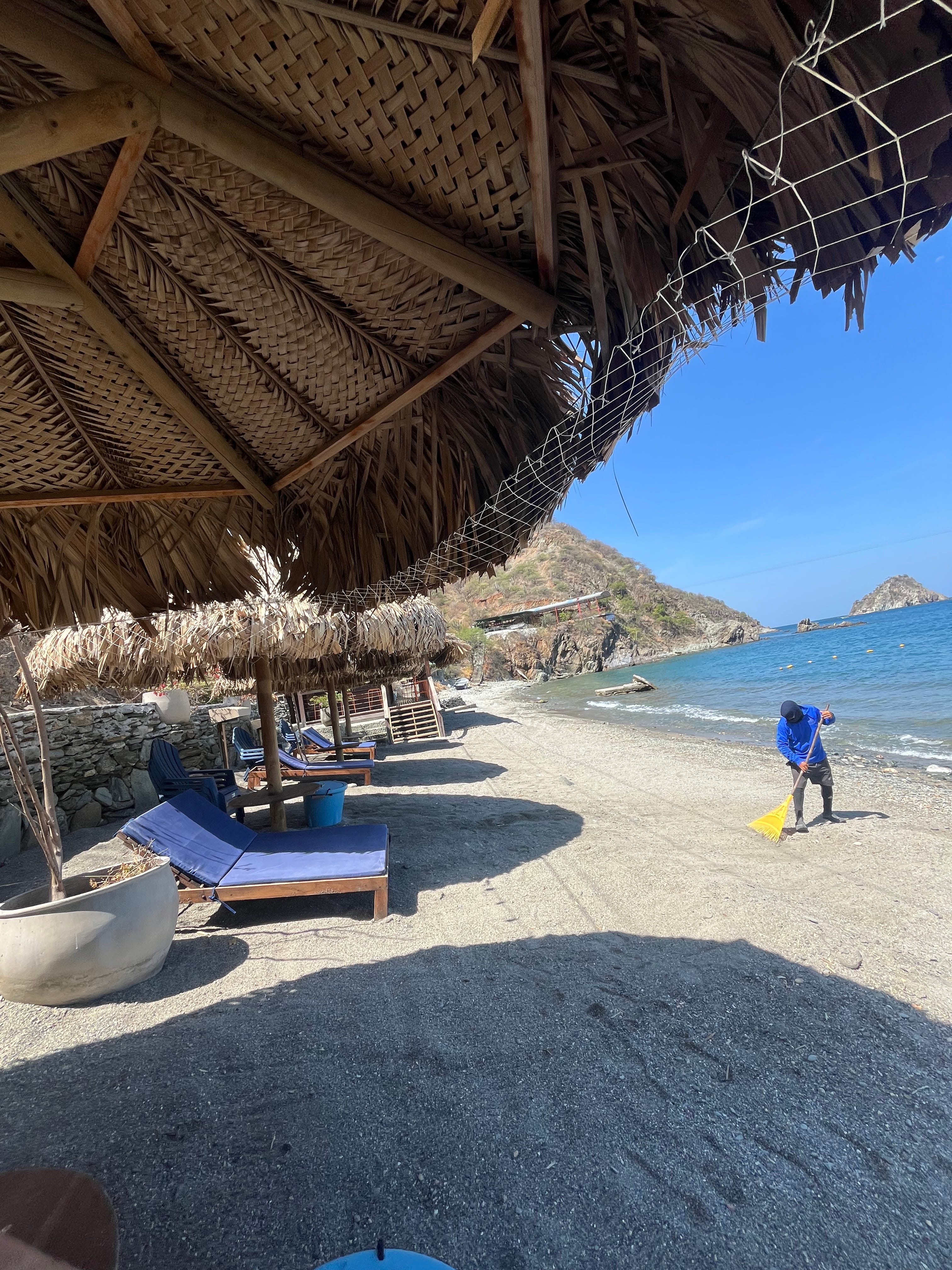
The walk is the right call. You watch the land change as you climb, sea grape, dry brush, hawks looking for something, the smell of salt and burnt grass. By the time you arrive, the place has earned you. Half the gringos in Colombia never see what’s actually between two points in this country because they’re always in a taxi.
The water
The Colombian Caribbean is famously kind of brown. Pretty in photos, less pretty in person, brackish river runoff, sediment, the usual. Cartagena’s water three days out of five looks like watered-down chocolate milk with sunscreen swirls.
Calderón doesn’t look like that.
The water is the color you came to Colombia expecting it to be. Clear enough to see thirty, forty feet down. You spot fish without a snorkel. Sand and rock bottom, no mystery scraps. You walk in and the afternoon downgrades from anxious to amused.
The visit (and the most counterintuitive sales lesson on this coast)
Here’s what I actually did at Playa Calderón last Saturday. I went to scout it. I didn’t plan to stay. I went with mi mujer, walked the trail, looked at the menu, looked at the water, figured I’d stay a couple of hours, and that’s all I did.
We bought two sodas. That was it.
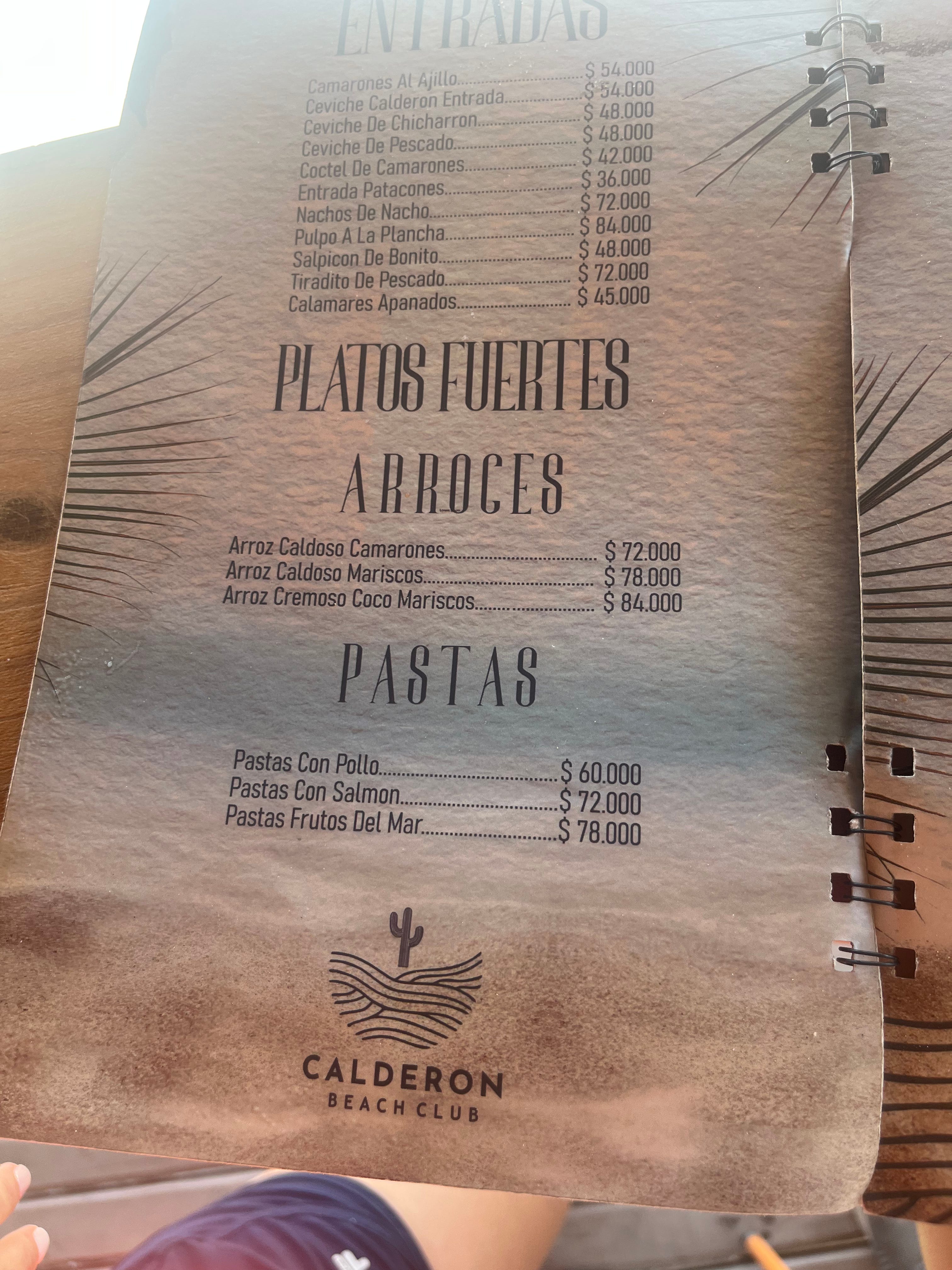
Plates ran 60,000 to 71,000 pesos ($15–$18 USD), not cheap. There was an actual chef working. The menu went beyond pescado frito into pasta, hamburgers, real plates instead of the deep-fried-anything most Colombian beaches throw at you. The staff didn’t push us to order food. Nobody handed us a menu twice. Nobody hovered. When my phone died, we asked for a charger and one appeared in under a minute, without commentary. We sat in a palapa, talked, swam, watched the family on the sand, and left after a couple of hours because we already had plans.
And here’s the strangest thing about that visit.
Because nobody tried to sell me anything, I’m going to spend three times more at Playa Calderón than I would have if they had pushed me.
I’m going back for my birthday.
This is a sales lesson the entire Colombian Caribbean has forgotten. In Cartagena, the second you sit down on the sand, the pressure to buy is so aggressive and so consistent that your defensive posture is to spend the minimum and leave. You finish your beer fast. You eat at a restaurant outside the touristy zone. You skip the boat tour. You build walls all day. By the end of the visit you’ve spent money, but resentfully, in survival mode.
In Calderón I bought two sodas, paid for the palapa, and walked out planning to drop 350,000 pesos there in three weeks.
Trust converts. Pressure repels. The fact that this isn’t obvious to half the businesses on this coast is the entire reason the other half are quietly winning.
Why nobody knows
Calderón isn’t on TripAdvisor in any meaningful way. It’s not in Lonely Planet. It’s not on the first three pages of Google when you search “Santa Marta beaches” in English. It’s not trending on Instagram. The only people I met were the family and the staff.
That’s not an accident. That’s the strategy.
Someone made a deliberate decision that being undiscovered is more profitable than being famous. No ads. No influencer trips. No volume play. The owner charges enough to keep the crowd small and runs an operation good enough that the right people come back on their own, without being chased, without being upsold. That’s a model the rest of the Colombian Caribbean should study and never copy, because the moment everyone copies it, it stops working.
So I’m going to do my part. I’ll tell you the beach exists. I’ll tell you it’s near El Rodadero in Santa Marta. I’ll tell you the price range. I won’t drop a Maps pin. I won’t post the photo with the location tag still on it. I won’t tell you the trailhead.
If you want the rest: walk down to El Rodadero in the morning. Ask the boat captains at the dock. Greet them properly. Don’t haggle. Tip the man.
They decide whether you get in.
The verdict
I don’t soften reviews. If a place sucks, I write that. Calderón doesn’t suck. After two hours of looking around, my notes had zero complaints. Trail manageable. Water clean. Staff professional without being stiff. No hustle. No scam. No noise. No upsell.
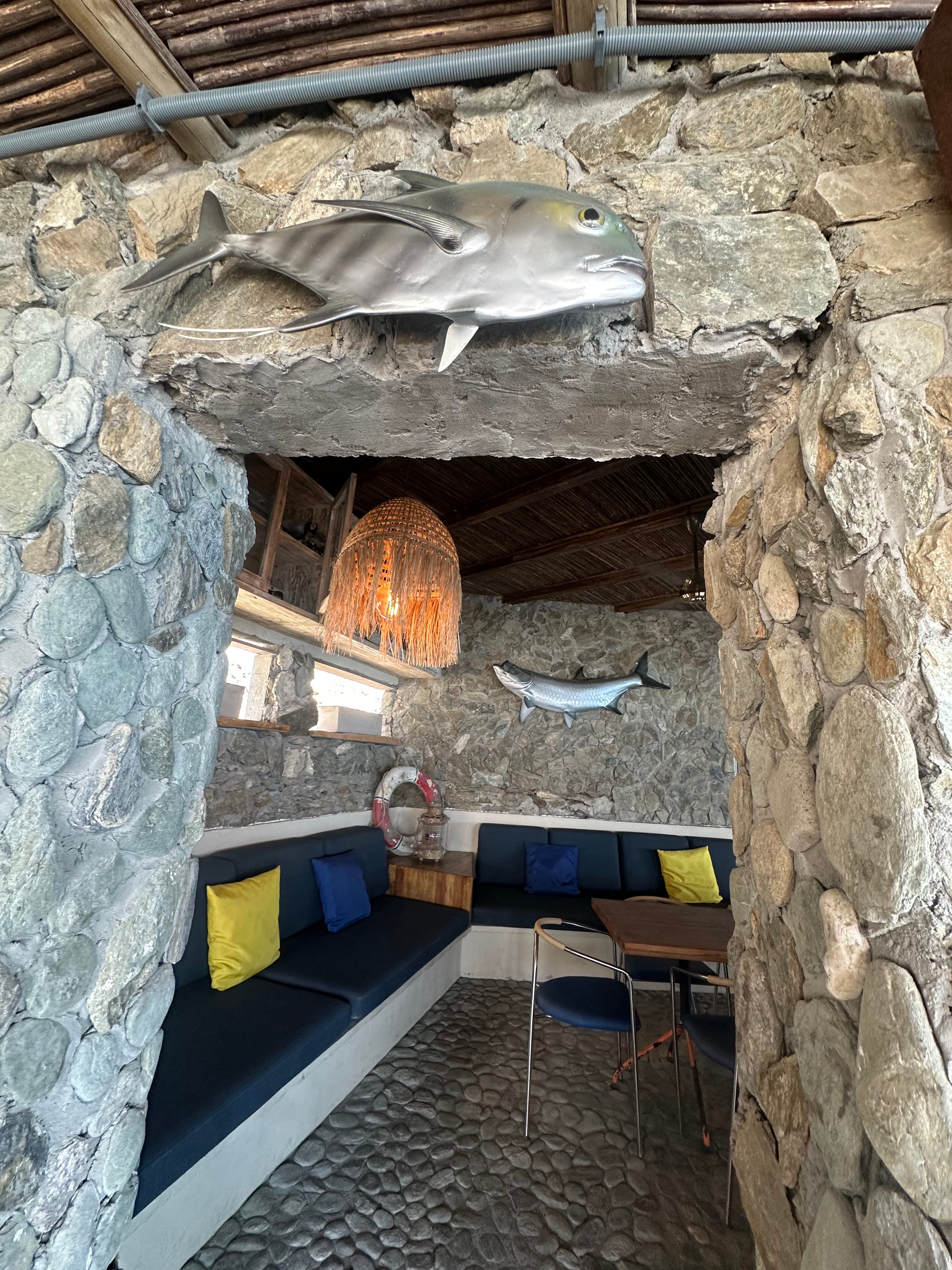
I’m spending my next birthday there. Full day. Real lunch. Whatever the chef recommends. The cold beer count won’t be polite.
The list of beaches on this coast that deserve serious writing keeps getting longer, beaches run by people who figured out that the Caribbean’s last competitive advantage isn’t infrastructure, marketing, or another Hilton.
It’s silence. And the discipline to not sell.
Dios te bendiga, amigos. More gems on the way.