
My First Time in America, at 31, After Three Generations Without a Visa
My grandfather crossed to Venezuela on a donkey. I just watched a driverless car take a left turn in Austin. Some thoughts on what you left behind, from the first person in my family to ever hold a US

I need to tell you about the moment I walked out of the airport in Austin, amigos.
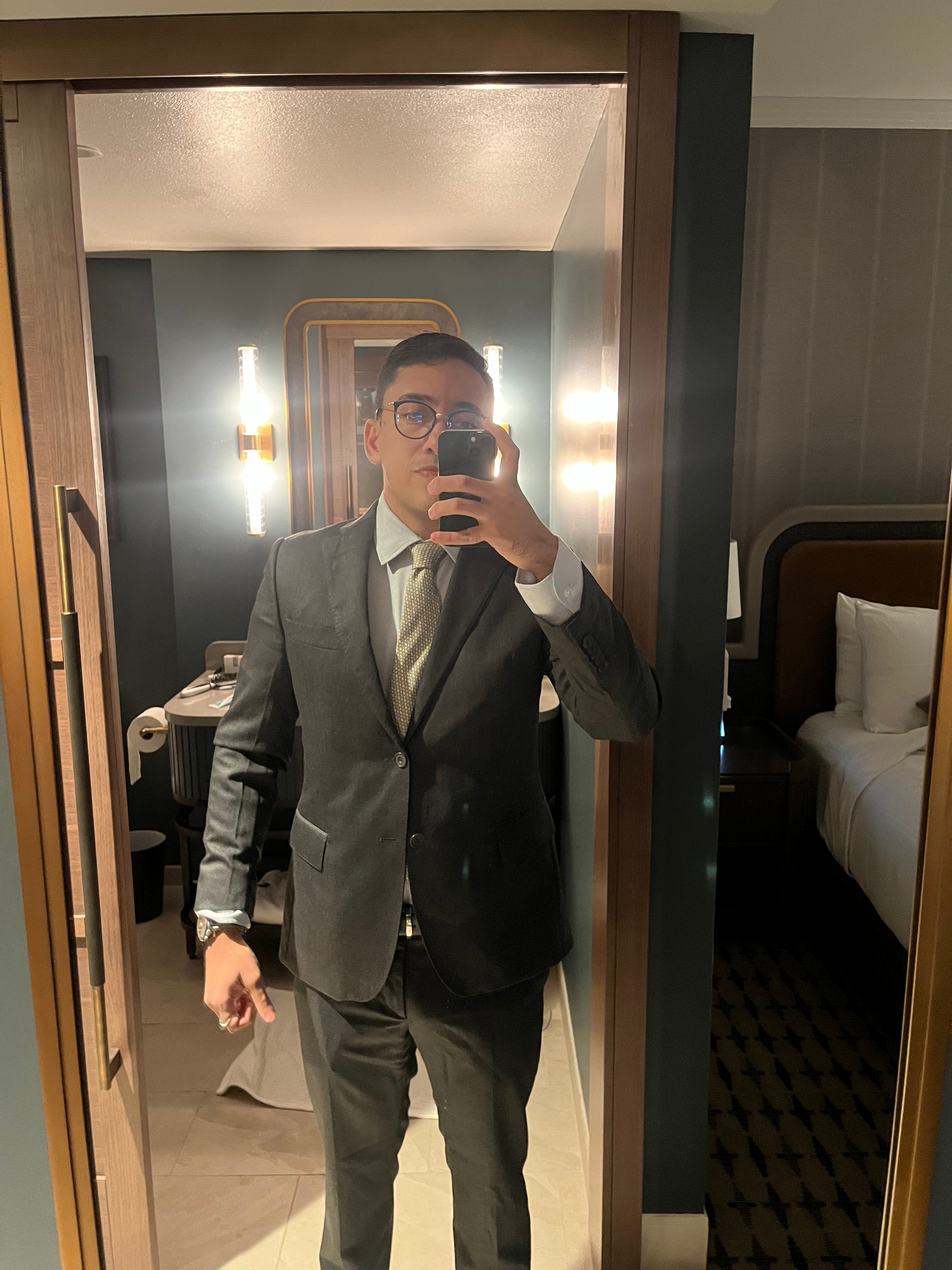
I’m 31 years old. This was my first time in the United States. My first time outside Latin America, period. No generation of my family before me ever held a US visa. Not one. So when those doors slid open and I stepped onto the curb, I stood there like an idiot, watching a Mercedes pull up to get somebody, and I could not move.
It’s not that Colombia has no Mercedes. We have plenty. It was something else, something I still can’t fully put into words. A feeling of prosperity that hits you in the chest the second you step outside. The streets. The order. The sense that nobody is sizing you up to rob you while you walk. I’ve been trying to describe that sensation since I got back and I keep failing, so let me try with a story instead.
The donkey and the Waymo
My grandfather on my father’s side was a campesino from Boyacá. When he needed goods to sell, he walked to Venezuela. On foot, with a donkey. The trip took weeks. He’d buy what he could carry, walk back weeks more, and sell it in Colombia to feed his family.
My father drove a tractomula, a long-haul truck, up and down Colombian highways. My mother raised us. My other grandfather drove a taxi. We clawed our way into something like middle class, then my father’s business broke, and from there it was on me.
One generation later, his grandson is standing on a street in Austin, Texas, watching a Waymo with nobody inside calmly execute a left turn.
I stood there doing the math on that distance. Donkey to robot taxi in one family tree. And gringos ask me why I get emotional about the United States, hahaha.
What Austin did to my brain
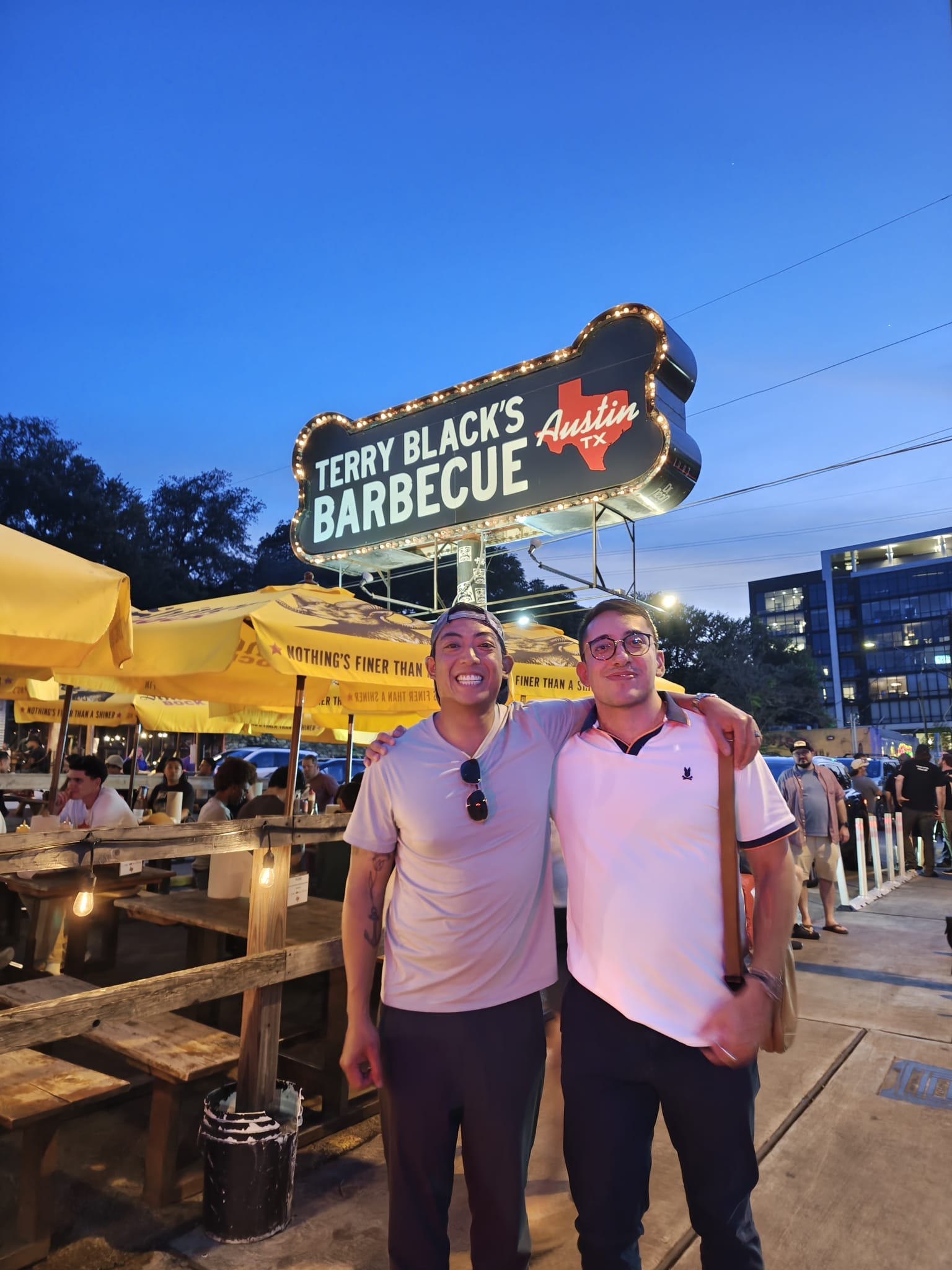
Everybody told me Americans are cold. Dry people, no warmth, mind their own business. Amigos, strangers greeted me in elevators. In ELEVATORS. I was raised on the Caribbean coast of Colombia and even I was not ready for elevator small talk.
I ate Texas barbecue and had to sit with my thoughts for a while. I visited the University of Texas and walked into an aerospace engineering event, students building things for space, casually, on a Tuesday. There is no version of that event anywhere in my country. Not one.
And underneath all of it, that thing I mentioned: I walked at night without checking my six every thirty seconds. You don’t realize you’ve spent your whole life doing that scan until the muscle finally relaxes. It took a few days. Then I understood that what I was feeling was not “wow, nice city.” It was my nervous system experiencing peace for the first time in 31 years.
Yes, I saw homeless people. I know the US has real problems, healthcare, addiction, all of it. But let me say something uncomfortable with all the respect in the world: poverty in America and poverty in Colombia are not the same sport. I have seen water shortages in Santa Marta. I have seen what broke looks like in Cartagena. The scale is simply not comparable, and anyone who has lived both sides knows it.
Here’s the part where I talk about you
Because this newsletter is mostly read by people doing my trip in reverse.
You left THAT. The abundance, the safety, the aerospace events on a Tuesday. You packed a bag and moved to my country, and I finally understand what you were missing, because I felt it in Colombia my whole life without naming it: the family that shows up, the faith, the cohesion, the feeling that life happens with people instead of next to them. Maybe our poverty is exactly what glued us together. You come here hungry for that glue.
Fine. Fair trade. But listen to me, parceros, because this is the honest part: most of you have no idea what you walked away from, and worse, no idea what you walked INTO.
I owe almost everything to your country. My real income is American income. I taught myself English with podcasts and YouTube because your people give away knowledge for free like it’s nothing. Without the United States I’d probably be doing Rappi deliveries in Bogotá, because in Colombia jobs still move through rosca, through clans and friends-of-friends, not merit. I once told you I made $13,300 in a month and it was true. What I didn’t say loud enough is that some months it’s zero. That’s the real life of anyone climbing without a safety net, and my net, when there is one, is made of American dollars.
So believe me when I say I studied your world with the hunger of someone who had never seen it. And now I watch gringos arrive in mine, floating on that same dollar abundance, feeling invincible, and skipping the homework entirely. No day counting. No idea how the money rules work. No clue what changes on August 7. The abundance that saved my life makes them careless with theirs.
You crossed into a country where the rules are unwritten, informal, and enforced selectively, except for the tax ones, which are written very precisely and enforced by a computer. I grew up inside this system. You didn’t. That gap is where gringos lose money every single day.
The two paradises
I’ll say it straight: I dream of living in your country someday, legally, through work or business, whatever door God opens. I want my kids to have the option to study there, because potential needs infrastructure, and you have it like nobody else.
You dream of living in mine, and I get it now more than ever.
Both dreams are valid. But both of us are foreigners in the other’s paradise, and a foreigner who doesn’t learn the local rules always, always pays the tuition. I paid mine in years of figuring out your world alone, one podcast at a time.
Yours is cheaper. It’s one document.
Dios te bendiga,
Tu Parcero
P.S. Being a foreigner means playing a game where nobody hands you the rulebook. So I wrote my country’s rulebook for you: The New Colombia Playbook, every rule verified and attorney-reviewed, $49 until the new government takes office August 7, then $79.